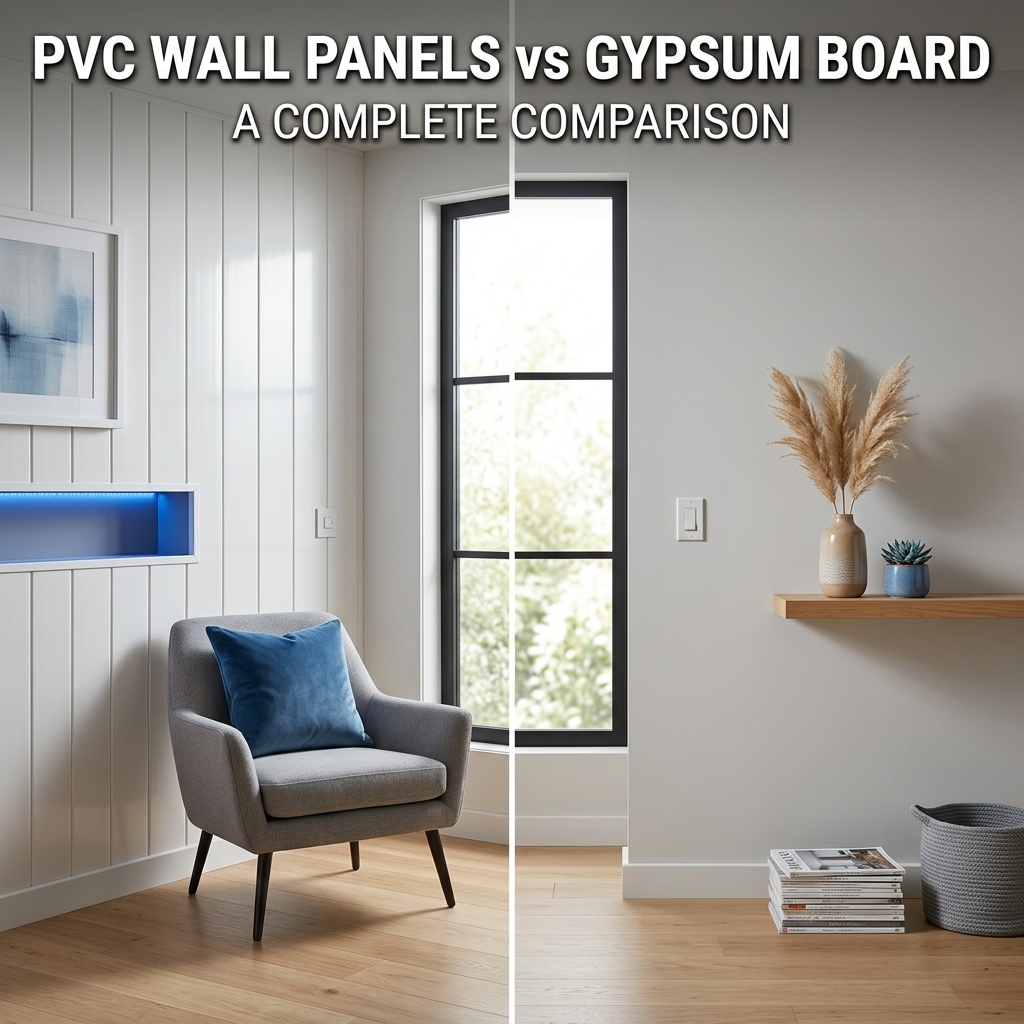
Choosing between PVC wall panels and gypsum plasterboards is one of the most common decisions in interior construction. Both have distinct advantages. Here is a head-to-head comparison to help you decide.
1. Moisture Resistance
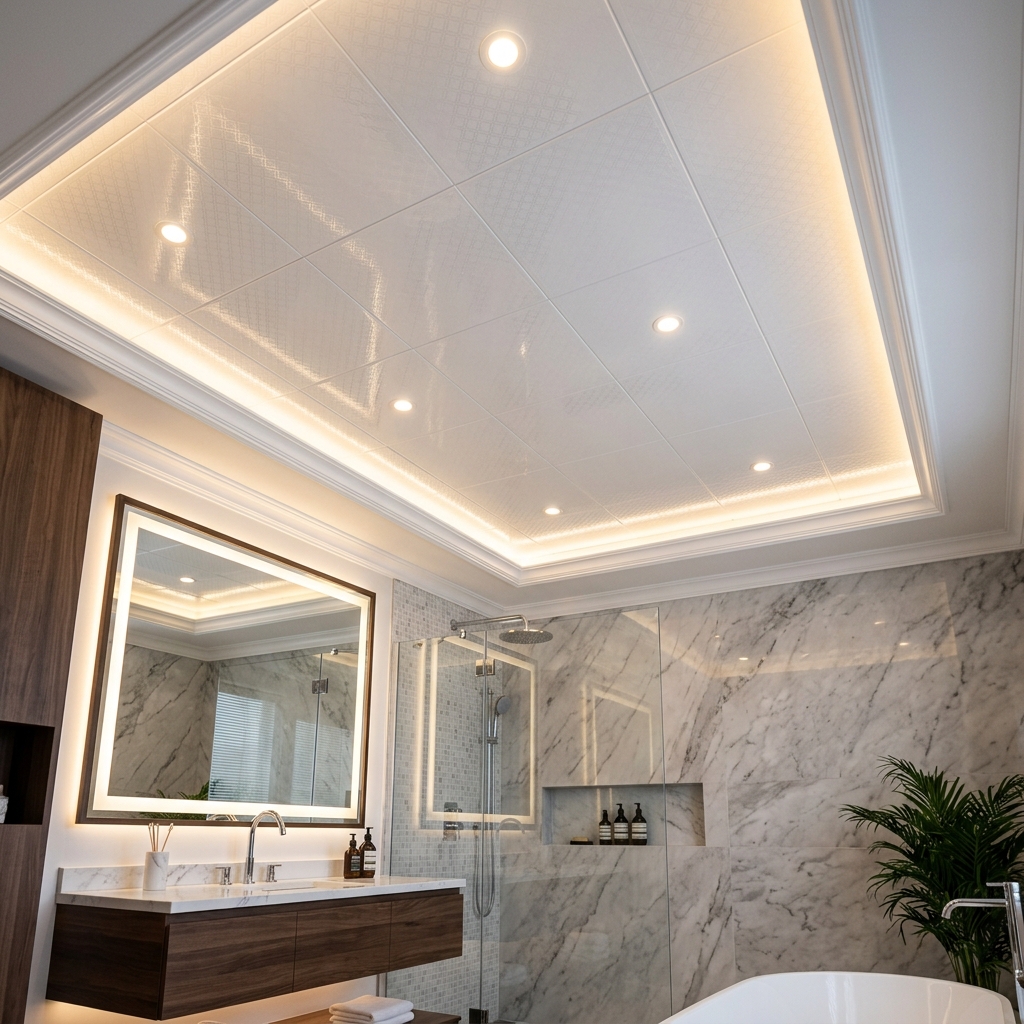
PVC Panels: Winner. PVC is inherently waterproof. It does not absorb moisture, making it ideal for bathrooms, kitchens, and humid environments. Standard gypsum boards can absorb water and sag, although moisture-resistant variants perform much better.
2. Fire Safety
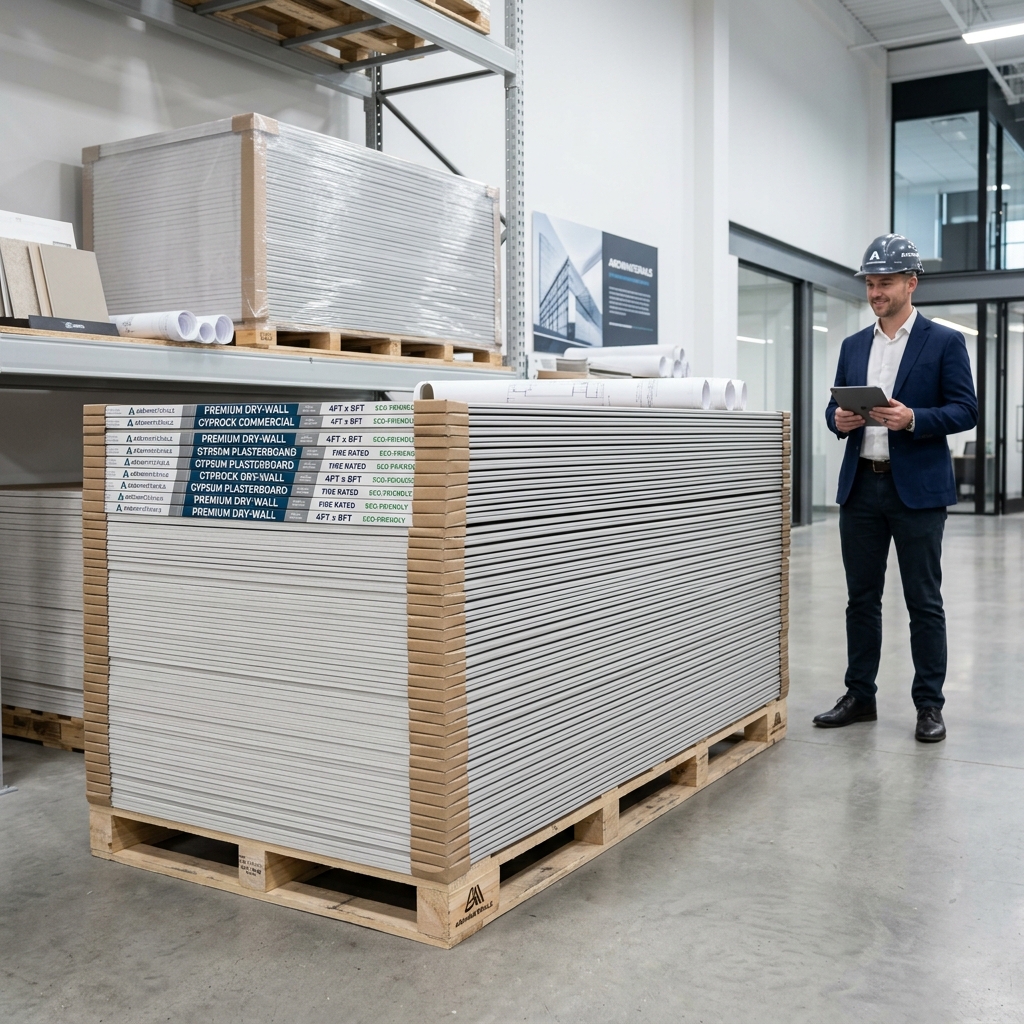
Gypsum Board: Winner. Gypsum contains chemically bound water that provides natural fire resistance. PVC panels, being plastic-based, can melt and produce toxic fumes if exposed to high heat. For fire-rated partitions, gypsum is the clear choice.
3. Sound Insulation
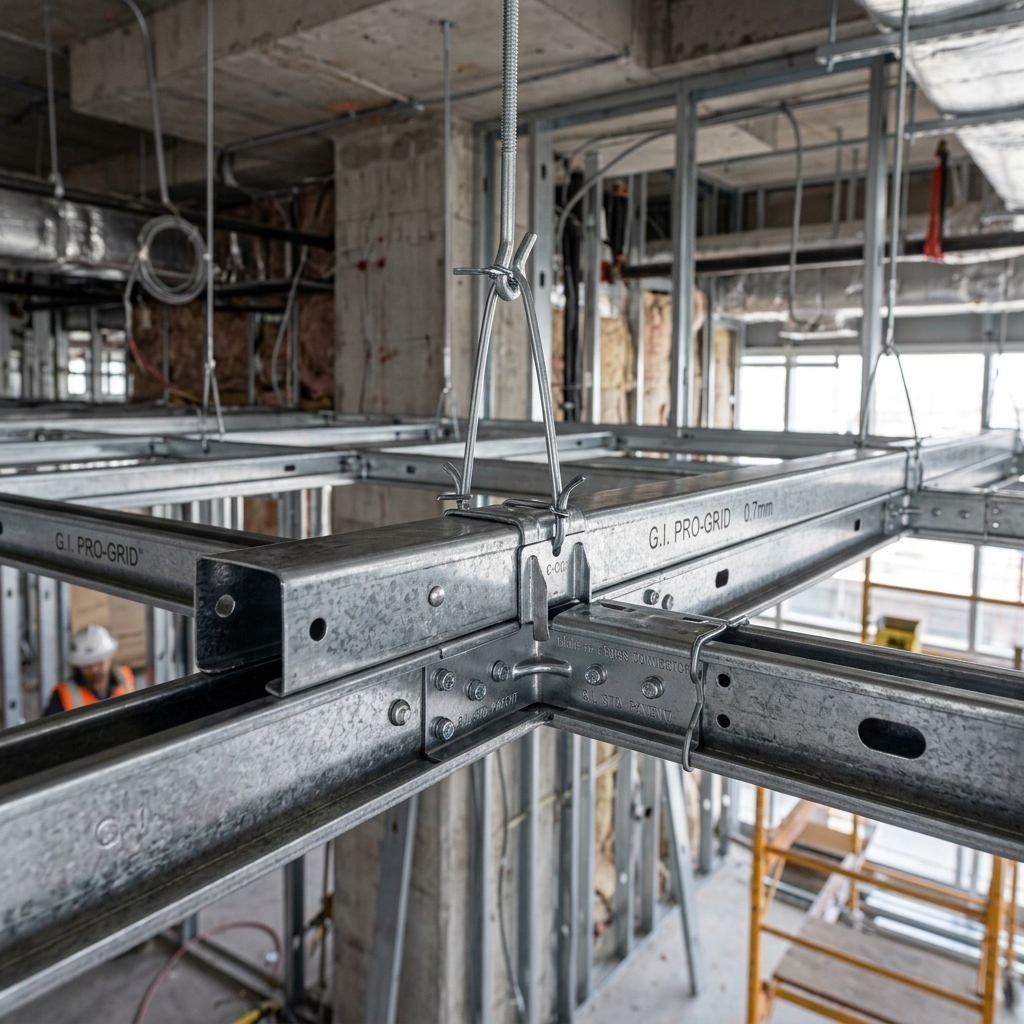
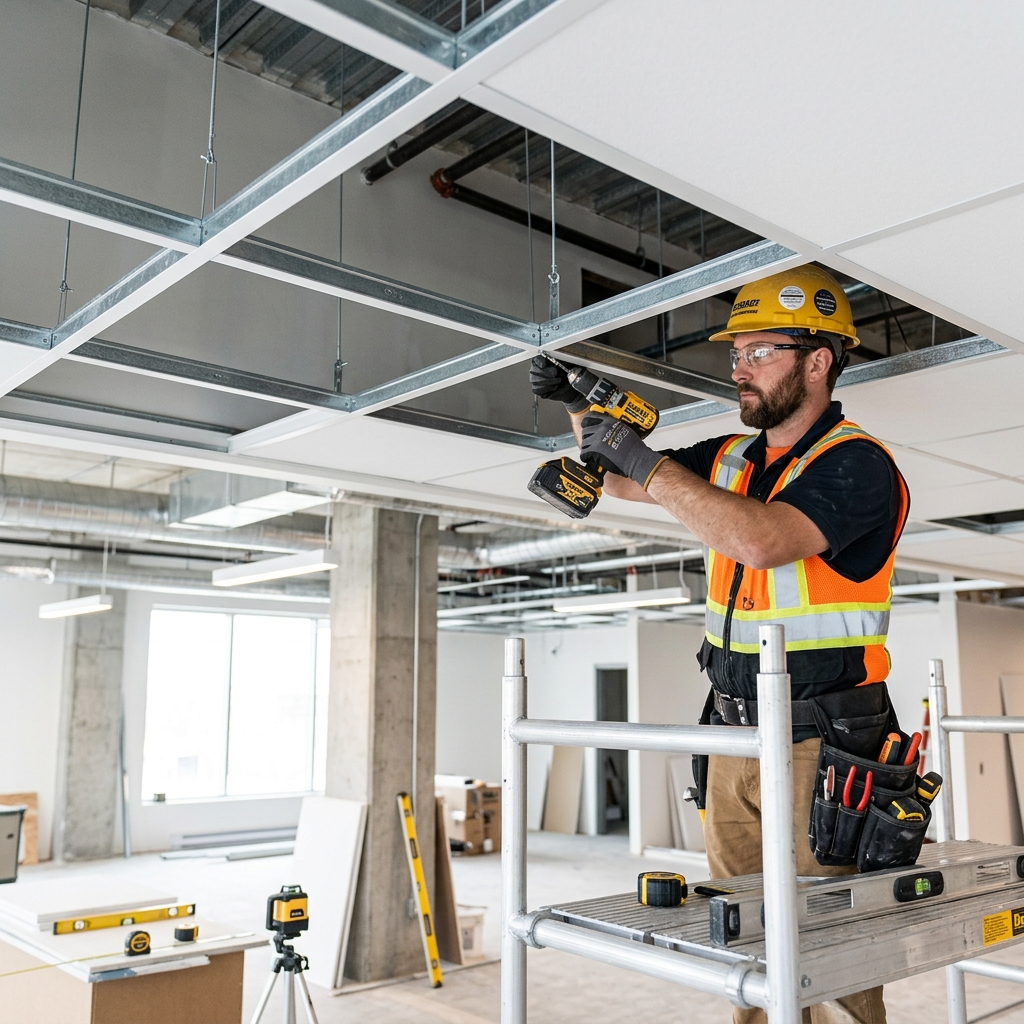
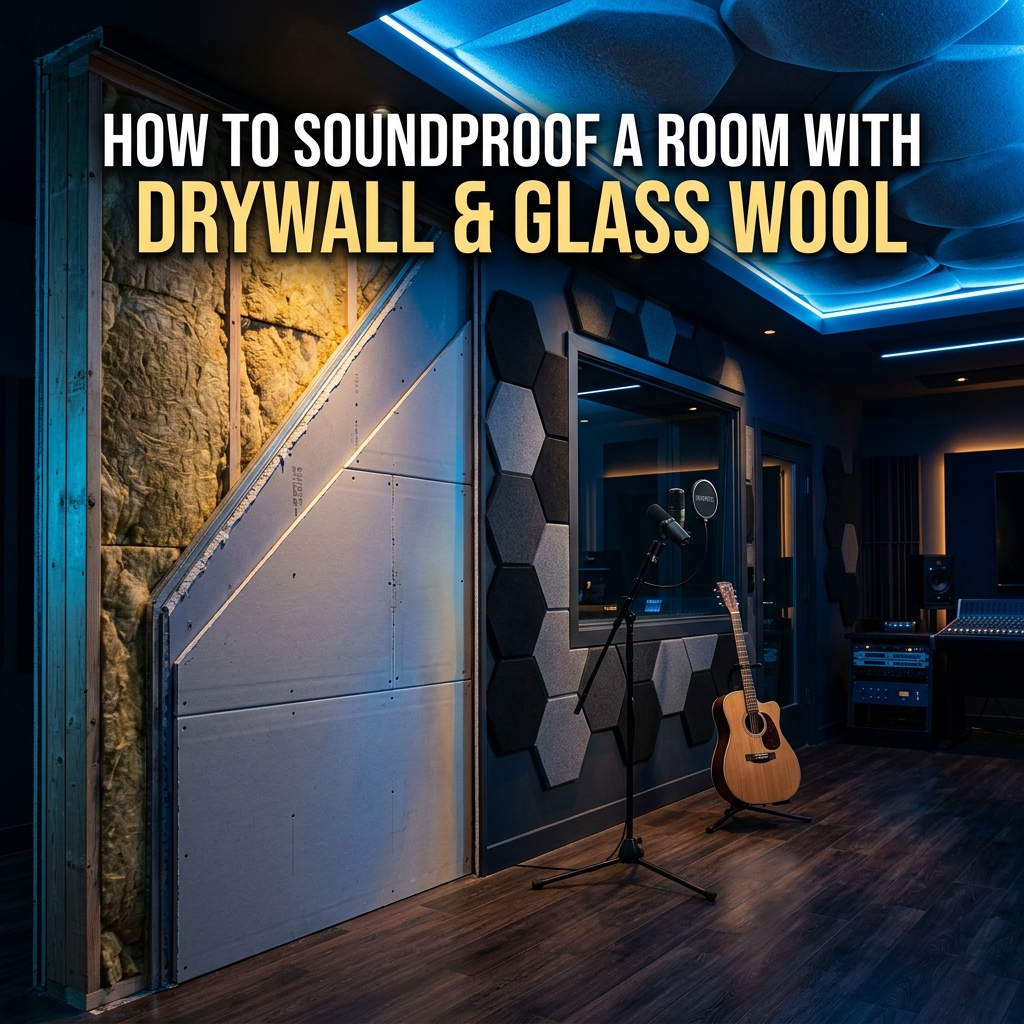
Gypsum Board: Winner. Gypsum boards with metal framing and glass wool insulation provide excellent STC (Sound Transmission Class) ratings. PVC panels are thin and offer minimal sound dampening between rooms.
4. Installation Speed
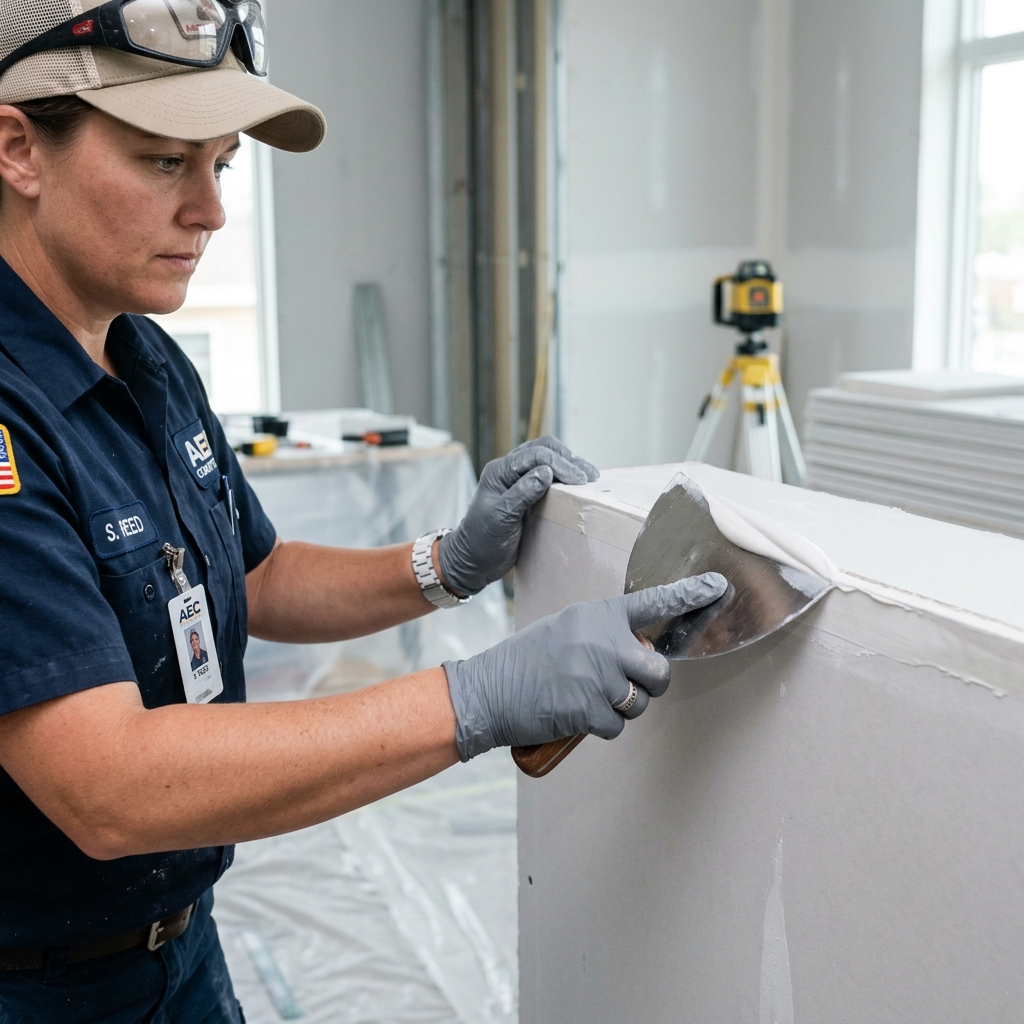
PVC Panels: Winner. PVC panels use a tongue-and-groove interlocking system that allows rapid installation without taping, mudding, or painting. Gypsum requires multiple finishing coats and drying time.
5. Aesthetics & Customization
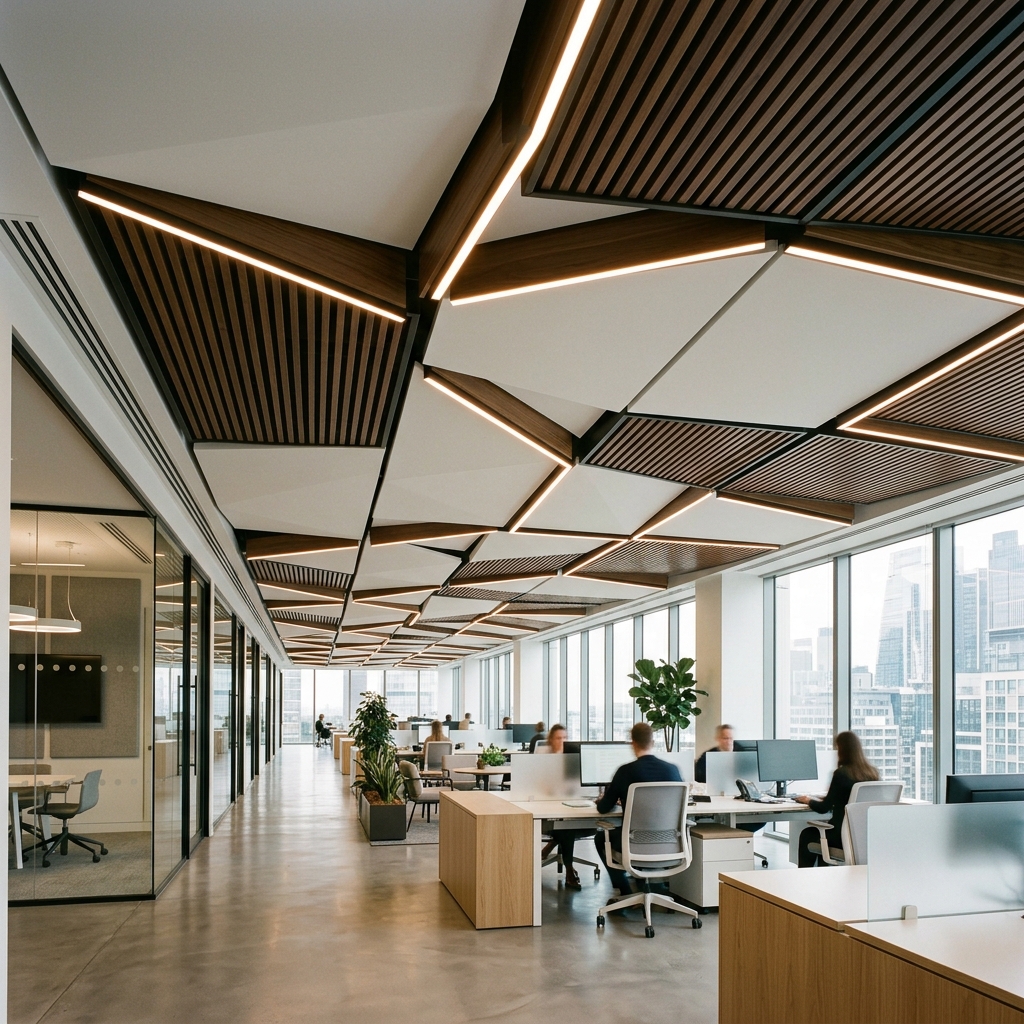
Tie. PVC panels come pre-finished in various woodgrain, marble, and solid color designs. Gypsum offers unlimited paint color options and accepts wallpaper, texture coats, and decorative cornices for bespoke designs.
6. Cost Comparison
Depends on scale. For small-area renovations (bathrooms, kitchens), PVC is cost-effective. For large commercial spaces, full gypsum systems with metal framing offer better long-term value, structural integrity, and fire compliance.
Verdict: Use PVC panels for moisture-prone, quick-install areas. Use gypsum boards for fire-rated, soundproofed, large-scale commercial and residential projects. GypExim supplies both — consult our team for a tailored recommendation.