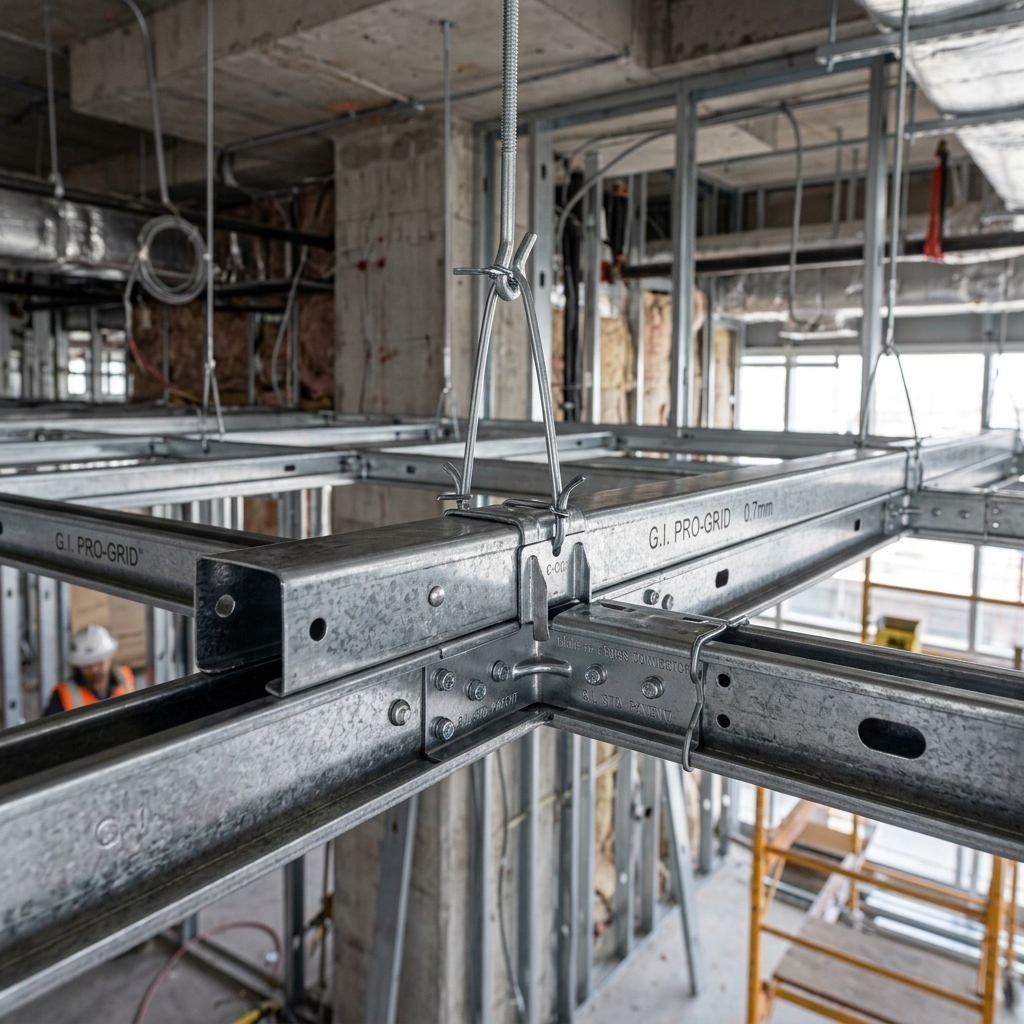
A false ceiling is only as strong as the hidden metal framing system suspending it. Low-grade steel sections or improper installation spacing lead to sagging, surface alignment cracks, and structural safety hazards.
To ensure a long-lasting, flat, and secure ceiling, you must understand the metallurgy and spacing parameters of G.I. channels.
1. Hot-Dip Galvanization (Rust Prevention)
Humidity inside ceiling cavities is inevitable. Standard steel will rust, weakening the structure. GypExim metal frames are hot-dip galvanized with a protective zinc coating that locks out oxygen and moisture, guaranteeing rust-free durability for decades.
2. High Tensile Strength and Gauge Accuracy
Our metal sections, including ceiling sections, perimeter channels, intermediate channels, and ceiling angles, are manufactured with precise gauge thicknesses to carry heavy suspended loads without bending or warping.
3. Knurling for Easy Screw Penetration
Drywall installers know how frustrating it is when self-drilling screws slip off steel frames. GypExim sections feature a knurled surface texture that holds screw tips firmly, ensuring quick, straight, and secure anchoring.
4. Precise Spacing is Non-Negotiable
To prevent sagging:
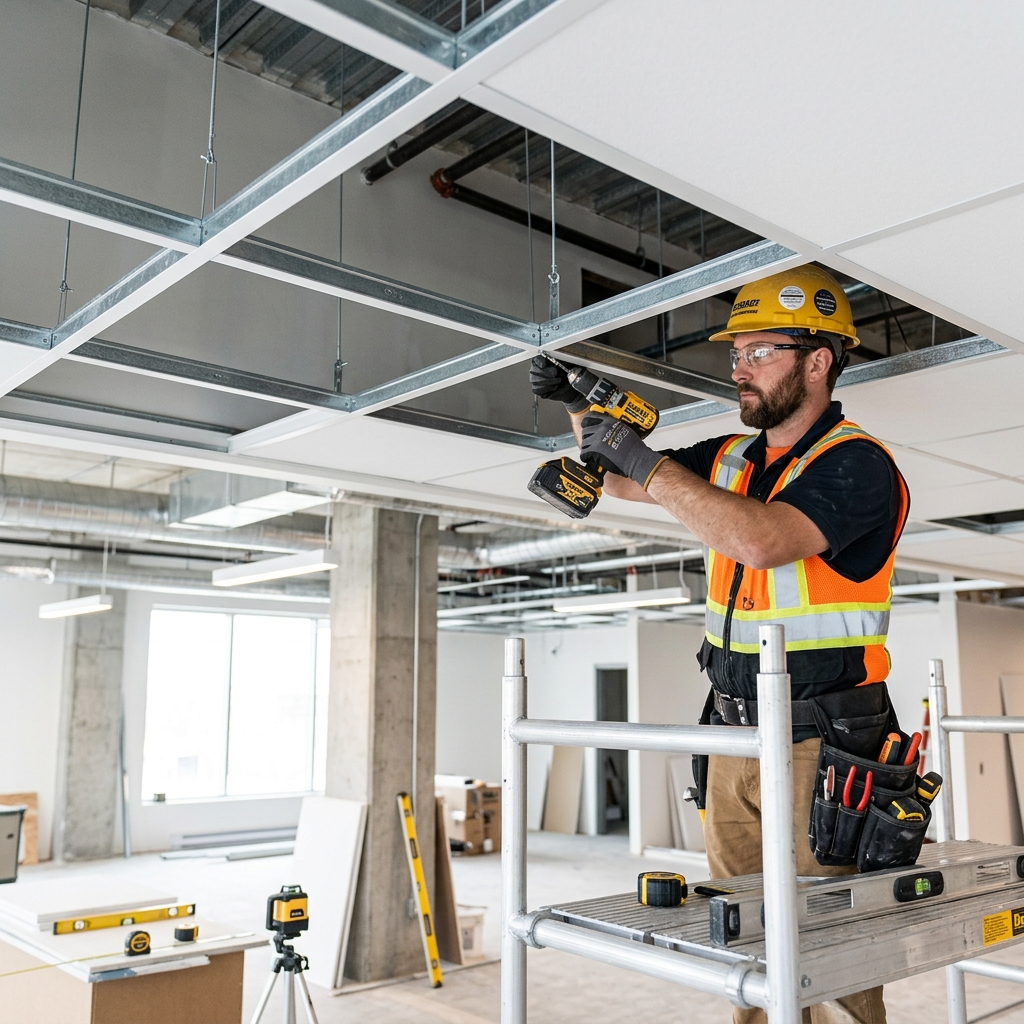
- Install main intermediate channels at max intervals of 1200mm.
- Install ceiling sections (channels holding the boards) at max intervals of 450mm.
- Use robust ceiling hangers anchored securely to the concrete slab.
Structural Warning:
Never hang heavy lighting fixtures or air conditioning units directly onto the plasterboard or thin ceiling sections. Always anchor heavy equipment directly to the concrete slab above or to reinforced structural metal grids.Conclusion: High-quality gypsum board needs high-quality metal framing to look and perform its best. Explore GypExim G.I. channels to build a stable, flat foundation for your partitions and ceilings.